
流化床气流磨
流化床气流磨是当今最先进的针对微米级至亚微米级颗粒的干式粉碎技术,通常可企及0.5微米到50微米的粒度范畴。在该类气流磨中,带有压力和温度的气流被引入研磨腔后,驱动原料颗粒高速运动而产生颗粒间的相互碰撞,从而产生粉碎效果以达到减小颗粒粒度的目的。基于该机理,流化床气流磨中的粉碎过程不存在颗粒和任何机械部件的碰撞,因此有效避免了在其他粉碎工艺中由于颗粒和机械部件碰撞而产生的机械部件磨损以及随之而来的对产品的污染。此外,流化床气流磨中带有动态空气分级轮,用户通过调节分级轮转速,即可灵活快速获取不同颗粒度的产品。
流化床气流磨
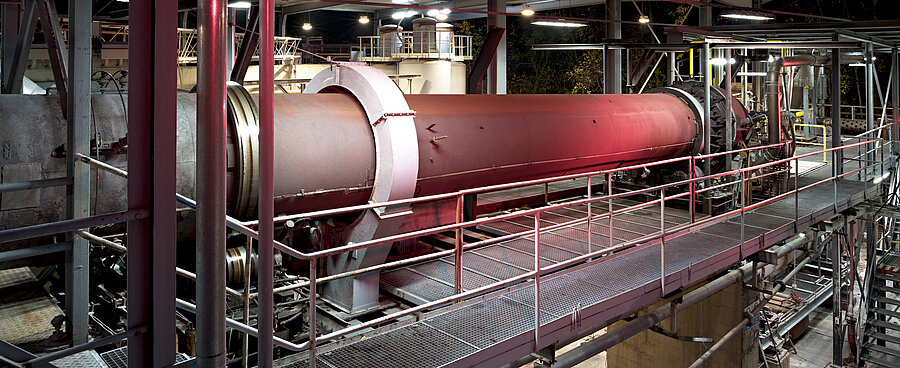
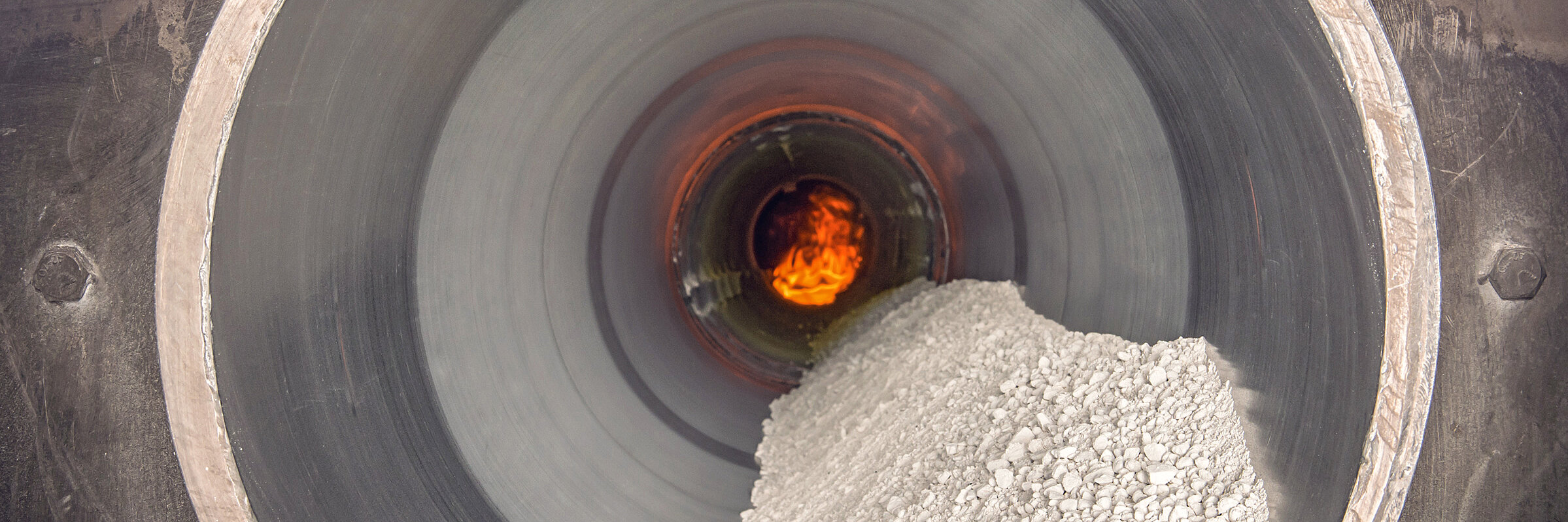
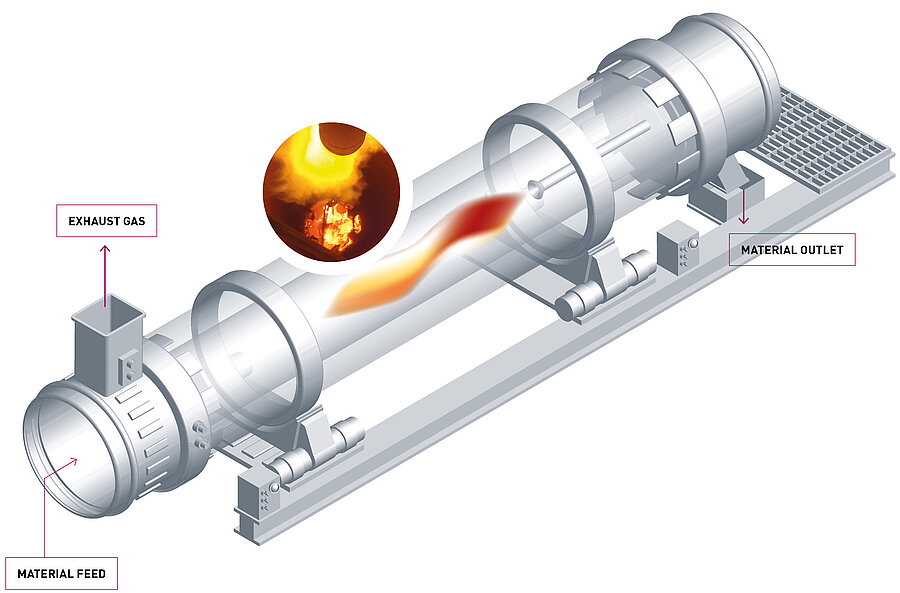
In a direct-fired rotary kiln, the burner is situated inside the kiln body, that is, inside the reaction chamber. The material is heated directly by the burner flame and the stream of hot gas produced by the burner. These kilns are usually lined with refractory (heat-resistant) material so that they can be operated at higher temperatures than kilns with plain metal tubes. Directly fired kilns are highly robust and easily scalable and can be used to achieve high throughput rates with relatively low production costs.
Facts & Data
- 4 direct heated rotary kilns
- Temperature range: 100 – 1,550°C
- Residence time: 15 – 180 minutes
- Reaction modes: continuous, batch, co-current, counter-current
- Typical Processes: calcination , sintering , reduction , oxidation and drying
| Kiln name | Heated kiln length [m] | Inner diameter [m] | Temperature range [°C] | Raw material throughput [kg/h] | Mode of operation | Special features | Heating type |
|---|---|---|---|---|---|---|---|
| GD0 | 12 | 1 | up to 1,500 | 150 – 1,500 | counter-current (co-current) | raw material silo, 10 m rotary cooler, cyclone preheater | natural gas |
| MD0 | 4 | 0.6 | up to 1,250 | 50 – 500 | counter-current | rotary cooler, cyclone preheater | natural gas |
| KD0 | 7 | 0.3 | up to 1,550 | 10 – 100 | counter-current or co-current | vibration cooler, rotary cooler, reducing gas atmosphere possible, afterburner | natural gas |
| BD0 | 0.6 | 0.35 | up to 1,000 | 15 l per batch | batch operation only | batch kiln for small quantities | natural gas |
IBU-tec Fact Sheet Directly Fired Rotary Kilns
DownloadIndirect Fired Rotary Kilns
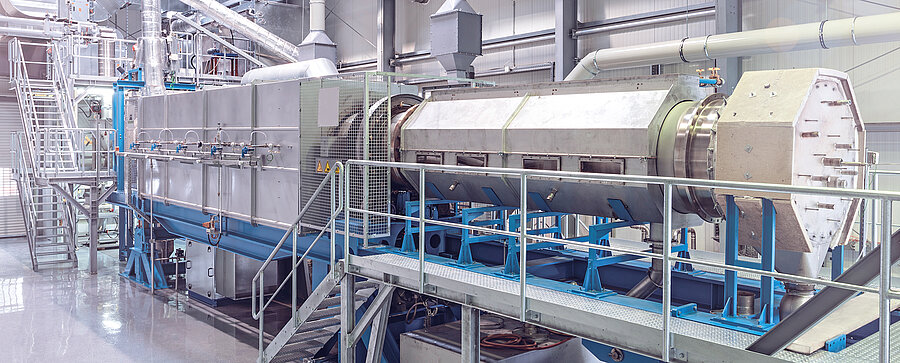
In contrast to directly fired kilns, indirect fired rotary kilns (also called rotary calciners) are equipped with natural gas burners or electric heating elements located outside the reaction chamber, so that the heat is transferred to the interior through the kiln shell. This arrangement makes it easy to operate the kiln with a controlled gas atmosphere in the reaction chamber (e.g. inert or reducing). Because combustion gases are kept out of the reaction chamber, the gas volume flow in an indirectly fired kiln is generally lower than in directly fired kilns. This means the indirect rotary kilns are excellent for treatment of very fine powders. They are also easier to clean, so that cross-contamination of materials can be more effectively prevented.